2024 Trends in the IT World: What Companies Need to Know

The Information Technology (IT) industry is in constant evolution, and the trends for 2024 are no exception. IT companies that aim to stay competitive need to be aware of these trends and take measures to consider them in their business strategies.

In 2024, we will witness a technological scenario filled with innovations and breakthroughs that promise to revolutionize the way we conduct business, interact, and access information. In this article, we will delve into some of the most impactful trends that are shaping the future of IT and how these changes may directly influence companies in this industry.

Expanding Artificial Intelligence (AI)

Artificial Intelligence (AI) continues to be a transformative power in various industries and will become more and more sophisticated and accessible, with applications in numerous areas, including task automation, data analysis, and decision-making. With breakthroughs in machine learning algorithms and Natural Language Processing, AI applications will become even more robust. From chatbots and virtual assistants to predictive analytics systems, IT companies are using AI to optimize processes, customize user experiences, and boost operational efficiency.

Internet of Things (IoT)

IoT will continue to connect devices and physical objects to the internet, generating large amounts of data that can be used to enhance efficiency and productivity.

Cybersecurity

Technological advancements lead to cybersecurity being a growing concern for IT companies.

In 2024, security will become an even higher priority for the companies in this industry. Advanced solutions, such as AI for threat detection, quantum encryption, and biometric authentication, will be implemented to protect sensitive data and ensure the integrity of digital operations.

Robotic Process Automation (RPA)

Robotic Process Automation (RPA) is a technology that uses software to automate repetitive tasks. This way, people can focus freely on more creative and complex activities, while mundane tasks are efficiently handled by the software.

With the ability to automate repetitive tasks, IT companies are leveraging RPA to increase efficiency, reduce errors, and free up resources for more strategic activities.

Cloud Computing

With the demand for real-time data storage and processing, the cloud will become the backbone of digital infrastructure. This will provide not only scalability, flexibility, and savings in matters of resources but also pave the way for new business models.

Virtual and Augmented Reality (VR and AR): VR and AR will gain momentum in 2024, with applications in areas such as entertainment and marketing.

Rising Quantum Computing

Quantum computing promises to revolutionize the way we process information, through the use of qubits, which are quantum units. Qubits have unique properties like superposition and entanglement, allowing quantum computers to solve certain types of problems much faster than traditional computers. While quantum computing is still in an early stage of development and faces technical challenges before becoming widely available, we still expect major breakthroughs in this area.


Impact of these Trends on IT Companies

AI can be used to automate repetitive tasks, freeing up employees to focus on more strategic tasks. It can also be a crucial support in decision-making by collecting, processing, and summarizing data about the state of the business.

IoT can be used to collect data about customers and business processes, that may be used to improve customer experiences and operational efficiency.

Cybersecurity is crucial in protecting the data and infrastructure of the IT companies.

Cloud computing offers IT companies the flexibility and scalability needed to meet the demands of a constantly changing market.

VR and AR can be used to create engaging and interactive experiences for customers and staff.


IT and Linguistic Services

With the expansion of AI, global companies need linguistic services to reach customers everywhere in the world.

Additionally, cybersecurity is a growing concern for companies dealing with sensitive data. Ensuring the integrity and confidentiality of this data requires not only robust security measures but also specialized translation and interpretation services to make it possible to handle documents and communications in different languages.

The trends in IT for 2024 are inherently linked to linguistic services. As IT companies seek to expand beyond borders and adopt new technologies, the need for specialized linguistic services becomes even more crucial. As strategic partners, linguistic service agencies must be aware of these trends and adapt their services to meet the diverse demands of the globalized and digitized market.


How do Linguistic Services Relate to these Trends?

Linguistic services are essential for IT companies that wish to communicate with customers and partners all over the world. The IT trends for 2024 will further increase the demand for linguistic services as IT companies expand their operations to new markets and use technology to connect with customers from different cultures.

Here we have some specific examples of how linguistic services can help IT companies leverage the IT trends for 2024:

  • Translation and localization of content into different languages are essential for IT companies to reach customers and partners worldwide.
  • Simultaneous interpretation can be used to facilitate communication between people speaking different languages in meetings and events.
  • Creative writing services can help IT companies create engaging and informative content for their marketing channels.
  • IT companies looking to benefit from the IT trends for 2024 need to invest in high-quality linguistic services. An experienced linguistic services agency can help IT companies find translation, localization, interpretation, and creative writing solutions that meet their specific needs.

Conclusion

The IT trends for 2024 offer a significant opportunity for IT companies looking to differentiate themselves from the competition. By investing in high-quality linguistic services, IT companies can leverage these trends to reach new markets, improve customer experience, and increase operational efficiency.


Certifications – What are they and what are they good for?

This topic usually raises some questions.

The certification of a translation is nothing more than the confirmation of the translator’s identity. In fact, a certification does not certify the quality of the translation, but only confirms that the alleged translator is, in reality, the person he or she claims to be and also ensures the legal validity of the translation.

Nowadays certifications are a highly requested type of formal attestation, especially when it comes to legal documents: criminal records, birth or marriage certificates and other similar documents. All legal processes require certifications, whether in processes of application for citizenship, civil or judicial processes or applications to schools and universities.

The certification allows legal recognition and allows translated documents to be accepted by official entities, both in Portugal and internationally.

In Portugal, the certification of translations is issued by notaries, lawyers, solicitors or consulates, and always requires the attachment of the original documents, that have been used as the source for the translation that requires said certification.

The certification draft is composed of several essential data that make the document reliable:

Name and personal identification number of both parties involved (the author of the translation and the person who certifies the translator’s identity), the language combination in question and, sometimes, type of document and issuing entity.

Once the original document has been delivered, the translation is done and it is time to certify it. The draft, the original document and the translation are stapled, resulting in a new document duly signed and stamped. The different parts of the document cannot be separated for other purposes.

In some cases, namely when the original documents cannot/should not be violated, such as driving licences, diplomas or personal ID cards, it is necessary to issue a certified copy of the original document. This procedure has to precede the translation and the respective certification and is usually done at a Portuguese postal service station, a law firm, at some solicitor or a notary office.

Some situations may also require that the certified translation is presented to the Portuguese Public Prosecutor’s Office (Procuradoria Geral da República), in order to receive an apostille that gives the translation equal force in law in any jurisdiction and country signatory to the Hague Convention. Unlike the translation certification, which attests to the translator’s identity and, as such, ensures the legality of the translation, the apostille is another formality that ensures the reliability of the entire process, through the certification of the entity that issued the document. You can check which countries are part of the Hague Convention here: https://www.hcch.net/pt/states/hcch-members.

In some foreign countries, the certification of translations is done by so-called “sworn translators”. In Portugal though this legal figure does not exist and, therefore, certifications can only be obtained by the above-mentioned entities.

In any case, we advise every customer to require proper information at the entities that require the certified translations, in order to obtain precise instructions about which documents need to be delivered and what the appropriate procedures would be.

We hope that this article helps you understand the certification process of translations. But if you still have any questions, just talk to us!

The translation process in 6 steps

If you think that “translation” is merely the conversion of a word, sentence or text from one language into another, perhaps you should read this article. To start with, we can let you know right away that a translator’s job is far more than that. Translations are not done in a straight line; they represent in fact a set of tasks with different durations and degrees of complexity. Thus, translation is a process and each of those processes has a different level of demand, depending on many variables.

Naturally, each professional has its customized organisation and handles its workflow as efficiently as possible, but these are the steps we consider to be essential to any translation process:

1. Analysis of the text

Reading through a text, if possible from start to finish, is one of the most important tasks in the whole translation process. Obviously, this step allows us to identify the original language of the text, but, more important than that, also the subject matter of the original text, the nature of the translation (if it is technical, legal, marketing or something else), the research that will be required and the adequate resources to handle the translation.

At this stage, the translator may also be able to have a forecast of the time needed to conclude each one of the tasks, making it therefore possible to set a deadline and guarantee better time management.

2. Research and translation

This is clearly the most demanding phase of the process and one that requires a faster pace. Researching terms, may they be of legal, technological, mechanical or any other nature, so that they are precise and accurate when placed in the context of the target language, is the task that may compromise the most the quality of the translation and also the way it will be perceived by the target audience.

3. Comparison between original and translation

This comparison is transversal to the entire translation process, from research and translation to proofreading and desktop publishing. The primary objective of translation is to transpose, without violating, the content of an original text from one language into another one. As such, this constant comparison between the original and the translation is essential for a good final product.

4. Proofreading

Reading one last time through a final translation is essential if we want to rectify any details that we might have overseen before. Ideally, this last read-through should occur a few hours after the conclusion of the translation, but should there be some time constrains it needs to be handled immediately. It’s important to handle this task either way.

5. Review by another professional

It is common knowledge that four eyes see better than two. That said, the final review should be handled by a professional assigned only to that unique task, who has not had yet any contact with the work during its elaboration. This way, the reviewer can keep an open mind and clean eyes and, thus, carry out the task in a rigorous manner.

6. DTP: Desktop Publishing or Formatting

This step, which is destined to preserve the general appearance of the original document, is relevant from the point of view of interpreting the document as a whole block, which has to maintain both the content and the form in order to assure it will be absolutely comprehensible.

After reading this article, you may now have a clearer idea of how the translator’s work can be organised. If you are about to start a career in translations or have just started it, you can add these tips to your handbook, in order to take care of your first jobs. With experience, you can tailor it to your own work style and pace.

If, on the other hand, you are interested in hiring a professional translator and your idea of translation was completely different, you had doubts or were curious about the whole process, we hope this article has clarified it for you.

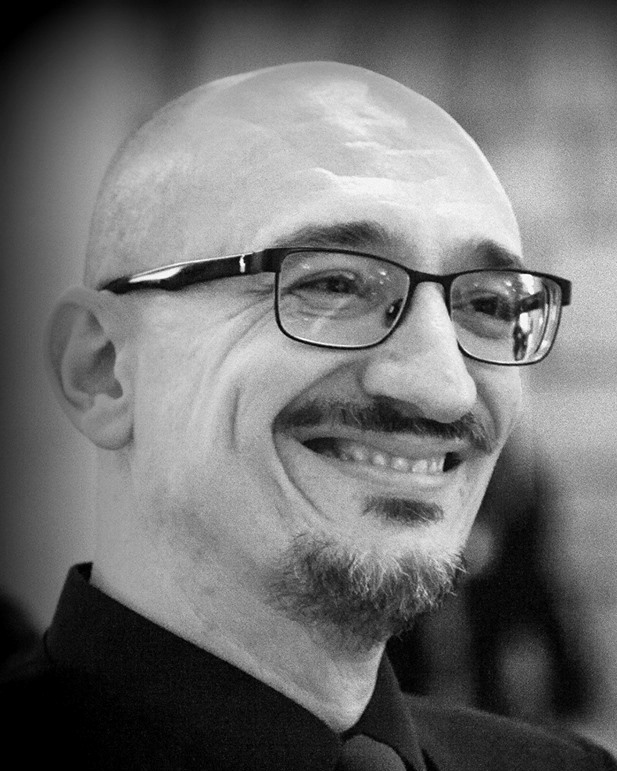
‘K’ as in EPIK, Know-how or… “Kali” aka Carlos

Full name: Carlos Alberto Vaz de Amaral

Age: 49

Birthplace: Penalva do Castelo, Beira Alta

Academic degree: Degree in Social Communication, specialization in Journalism

In order to close the chapter of our biographical articles related to our managing partners, we will end talking, last but not least, about Carlos. Just give him a loft in New York, allow him to live the dream of a Transamerican coast-to-coast, take the handball team of Clube de Futebol de Sassoeiros to the First Portuguese Division or develop the cure for cancer and we have a happy man! Nothing too difficult, right?

He was born in Portugal, but he missed being born German by only six months, his age when his parents took him to live in Germany. Until 1990, when he decided to study in Lisbon, Carlos lived in Ludwigsburg, a beautiful historic city in Southern Germany. His plans were quite simple: he moved to Lisbon “only” to get his degree and return “home” immediately after that… as it seems though, his “home” moved to Lisbon instead.

He describes himself as being “Just a regular guy, like everybody else, but completely different”. Carlos is a funny person, forthcoming and helpful, always cracking a joke and keeping people upbeat at the office. The well-being of his team and his staff is extremely important for him. But it’s not all roses! Legend has it that Carlos has an evil, less sympathizing twin brother: Alberto. And sometimes, Alberto takes Carlos’s place at the office. Now we are talking about a pungent and somewhat caustic personality, with a very particular temper – to say the least – and not a good-humoured person. This twin says things like “it annoys me that people dare to think that they can be right… and me wrong”. Should you cross Carlos’s path and be curious about it, you can always ask him. Just be sure to check first if it’s really Carlos you’re talking to or Alberto!

But, at the end of the day, be it Carlos or Alberto, he is just like the other managing partners, just somebody that wants the best for the team and TETRAEPIK and gives his best, day in, day out!

“More than offering solely a (good) salary, I want TETRAEPIK to offer people the chance to look back one day and say that it was worth the while knocking on our door, because this is, in the end, the place where they were happy (professionally, of course, but not only that…).”

On an academic level, Carlos has no direct connection to the area of Translation. He actually got a degree in Journalism and this background gives him a clearer and more comprehensive view of other aspects of daily life and allows him to look at business in general and TETRAEPIK in particular in a completely different way, whenever that perspective is essential. It is mainly this analytical capacity, which allows him to detect and solve problems and, very importantly, to communicate and do so fluently in several languages, that keeps Carlos always at the forefront, namely in business development and in contact with international customers.

Besides acting as Business Director, he also heads the globalisation department, called Globalisation Solutions: https://tetraepik.com/globalisation-solutions/. His value is visible in every step of his work at TETRAEPIK, but also outside the office walls, and has been recognised on several fronts. He is TETRAEPIK’s main representative at SAP and that means being present at meetings, conferences and other initiatives of the German software powerhouse. Carlos has also been invited to be one of only a couple of representatives of almost two hundred translation agencies at SAP’s Supplier Advisory Board. He is proactive, dynamic and responsible for the connection between TETRAEPIK and everyone else involved in SAP’s translation environment. He is also one of the founders of ASAP Globalizers, an international company, with headquarters in Cologne, Germany, that integrates 11 agencies linked to the SAP world that offer a wide range of services in the areas of translation, localization and content creation – https://tetraepik.com/clientes-e-parcerias/.

He is highly communicative, open to the world and holds on to each project with tenacity and determination. He always gives his all in all endeavours he is involved in and invests a lot of his passion in each journey but also demands the same commitment from his team at TETRAEPIK in return.

For Carlos, creating this company was a window of opportunity one could not ignore. It was, in his opinion, a moment of perfect cosmic alignment: perfect timing, perfect people, coming together at the right spot and the right moment. “To be able to be on board of this ship, with these people, doing what we do and having the audacity of dreaming about doing it better for all the people involved” is something special. According to Carlos, “TETRAEPIK’s journey has been impressive – a totally unexpected emotional rollercoaster.”

TETRAEPIK: What distinguishes TETRAEPIK from other agencies?

Carlos: Obviously the people involved and the relationships we manage to develop.

TETRAEPIK: What do we do best?

Carlos: Anything done with conviction, passion and without hidden agendas is, in my opinion, well done.

To get to know him a little bit better, words won’t suffice, but knowing what he likes and his passions might help.

TETRAEPIK: What is your favourite artist or work:

Carlos: In music, it’s impossible to choose only a few, but if I had to, Prince, Metallica, Linkin Park, My Chemical Romance and Breaking Benjamin are clearly my favourites; Literature – ‘Lord of the Rings’ by J. R. R. Tolkien, ‘Game of Thrones’ by George R. R. Martin and the entire works of Stephen King. Being an aficionado of Fantasy, Carlos could never disappoint when asked about his favourite quote. Without hesitation, he gave us this emblematic and enigmatic quote from the author of one of his favourite works: “I don’t know half of you half as well as I should like; and I like less than half of you half as well as you deserve”. Why is this quote so special to Carlos? We wouldn’t dare to answer and leave the suspense in the air… Don’t miss out on the next episodes and neither will we.